BLOG DETAILS
Inbound vs Outbound Call Centers: A Complete Guide
Introduction
Call centers play a central role in modern business operations by serving as structured points of interaction between organizations and their customers. As companies scale, diversify markets, and adopt customer-centric strategies, call centers have evolved from simple phone-based support units into complex contact centers integrating voice, digital channels, analytics, and automation.
Broadly, call center operations fall into two categories: inbound and outbound. While both involve customer communication, they differ significantly in purpose, workflows, performance metrics, and business impact. Understanding these differences is essential for students of business, management, operations, and information systems, as well as organizations evaluating customer support strategies.
This guide provides a neutral, academic overview of inbound and outbound call centers, including definitions, operational models, examples, and illustrative diagrams.
What Is an Inbound Call Center?
Definition
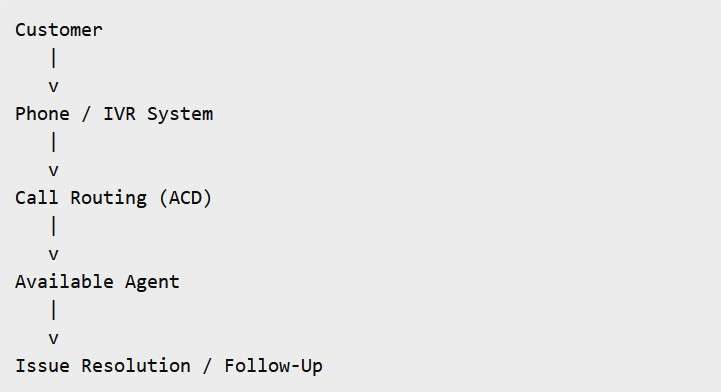
An inbound call center is a centralized operation that receives incoming calls initiated by customers. These calls typically involve requests for information, assistance, or problem resolution. The primary objective of an inbound call center is to provide timely, accurate, and satisfactory responses to customer needs.
Inbound call centers are commonly associated with customer service, technical support, and help desk operations.
Common Inbound Call Types
- Customer service inquiries
- Technical support and troubleshooting
- Billing and account questions
- Order tracking and returns
- Appointment scheduling
- Emergency or priority support lines
Inbound Call Flow (Diagram)
Key Characteristics
- Customer-initiated communication
- Reactive service model
- High emphasis on service quality and resolution speed
- Typically operates with queues and wait-time management
Example of Inbound Call Center Use
A telecommunications provider operates an inbound call center to handle service outages, billing questions, and plan changes. Customers call when they experience an issue, and agents work to resolve the concern during the interaction or escalate it when necessary.
What Is an Outbound Call Center?
Definition
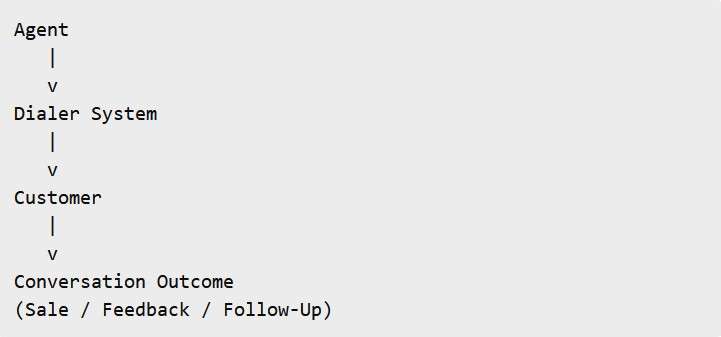
An outbound call center is a centralized operation where agents initiate calls to customers or prospects on behalf of an organization. The goal of outbound calling is typically proactive engagement, such as sales, research, or customer retention.
Outbound call centers are commonly used in sales, marketing, and customer relationship management activities.
Common Outbound Call Types
- Sales and lead generation calls
- Customer feedback and satisfaction surveys
- Subscription renewal reminders
- Cross-selling and upselling
- Product or service announcements
- Payment reminders and collections
Outbound Call Flow (Diagram)
Key Characteristics
- Organization-initiated communication
- Proactive engagement model
- Strong focus on conversion, reach, and efficiency
- Often uses predictive or automated dialing systems
Example of Outbound Call Center Use
A subscription-based software company uses an outbound call center to contact customers whose subscriptions are nearing expiration. Agents provide renewal options, answer questions, and offer incentives to retain customers.
Core Differences Between Inbound and Outbound Call Centers
Aspect | Inbound Call Centers | Outbound Call Centers |
Call Initiator | Customer | Organization |
Primary Goal | Support and resolution | Sales, outreach, or research |
Communication Style | Reactive | Proactive |
Key Metrics | Service level, resolution time | Conversion rate, contact rate |
Technology Focus | IVR, ACD systems | Dialers, CRM integration |
Technology and Infrastructure
Inbound Call Center Technology
Inbound operations rely heavily on systems that manage high volumes of incoming calls efficiently:
- Interactive Voice Response (IVR): Guides callers through menu options
- Automatic Call Distribution (ACD): Routes calls to appropriate agents
- Customer Relationship Management (CRM): Provides customer history and context
- Knowledge Bases: Support consistent and accurate responses
Outbound Call Center Technology
Outbound call centers emphasize systems that maximize reach and productivity:
- Predictive and Power Dialers: Automate dialing processes
- CRM Platforms: Track leads and customer interactions
- Call Recording and Monitoring Tools: Ensure compliance and quality
- Analytics Dashboards: Measure agent and campaign performance
Performance Metrics and KPIs
Inbound Call Center Metrics
Inbound performance is measured primarily by service quality and efficiency:
- Average Handle Time (AHT)
- First Call Resolution (FCR)
- Service Level (e.g., calls answered within a target time)
- Customer Satisfaction (CSAT)
- Abandonment Rate
Outbound Call Center Metrics
Outbound performance focuses on effectiveness and outcomes:
- Contact Rate
- Conversion Rate
- Calls Per Hour
- Revenue Per Call
- Campaign Completion Rate
Staffing and Skill Requirements
Inbound Agent Skills
- Strong problem-solving abilities
- Active listening and empathy
- Technical or product knowledge
- Ability to handle high call volumes
Outbound Agent Skills
- Persuasive communication
- Objection handling
- Time management
- Sales or research-oriented mindset
Compliance and Ethical Considerations
Both inbound and outbound call centers must adhere to regulatory and ethical standards, which may vary by region.
Inbound Compliance Considerations
- Data privacy and protection
- Secure handling of customer information
- Call recording consent
Outbound Compliance Considerations
- Do-not-call regulations
- Consent and opt-out mechanisms
- Call timing restrictions
- Transparency in sales and data usage
Hybrid Call Center Models
Many organizations operate hybrid call centers, combining inbound and outbound functions within a single operation.
Hybrid Model Diagram

Hybrid models allow organizations to optimize resources, cross-train agents, and respond flexibly to changing demand.

Strategic Considerations for Businesses
When deciding between inbound, outbound, or hybrid models, organizations typically consider:
- Business objectives
- Customer expectations
- Industry requirements
- Budget and scalability
- Regulatory environment
For example, a healthcare provider may prioritize inbound support for patient inquiries, while a retail brand may balance inbound service with outbound promotional campaigns.
Conclusion
Inbound and outbound call centers serve distinct but complementary roles in modern business operations. Inbound call centers focus on responding to customer needs and maintaining service quality, while outbound call centers emphasize proactive engagement, growth, and retention. Understanding their differences in structure, technology, metrics, and strategic application allows organizations and students alike to evaluate how customer communication systems support broader business goals.
As customer expectations continue to evolve and communication channels expand, the distinction between inbound and outbound operations remains a foundational concept in customer experience management and business process design.