BLOG DETAILS Table of Contents...
Read More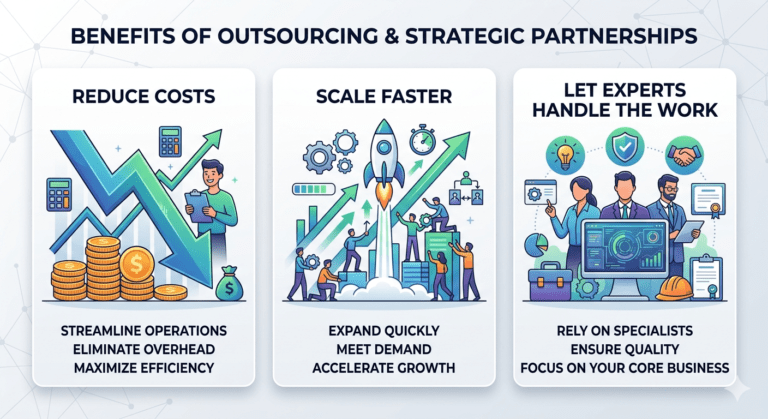
Outsourcing sounds simple on paper. Reduce costs, scale faster, and let experts handle the work.
But in reality, a lot of companies try outsourcing once and quietly walk away from it. Not because outsourcing doesn’t work, but because it was done the wrong way.
If you’ve ever felt like outsourcing created more problems than it solved, you’re not alone. Let’s break down where things usually go wrong, and what successful companies do differently.
Get a Free Outsourcing Strategy Call
We’ll assess your business needs and build a tailored outsourcing solution to help you save time and scale faster—no obligation, just smart solutions.
By signing up you agree to our Terms of Service and Privacy Policy.
1. Treating Outsourcing as a Quick Fix
One of the biggest mistakes is using outsourcing as a shortcut.
Companies often outsource when they’re overwhelmed, understaffed, or trying to cut costs quickly. The expectation is that the external team will instantly “fix” everything.
That rarely happens.
Outsourcing works best when it’s part of a long-term strategy, not a last-minute decision. Without clear planning, even the best vendor will struggle to deliver results.
What works better:
Define exactly what success looks like before you outsource. Set measurable goals, timelines, and expectations from day one.
2. Lack of Clear Processes
Many businesses outsource tasks that are not even clearly defined internally.
If your internal team doesn’t have structured workflows, documented steps, or clear KPIs, an outsourced team won’t magically figure it out.
This leads to confusion, delays, and frustration on both sides.
What works better:
Document your processes before handing them off. Even a simple step-by-step guide makes a huge difference.
3. Choosing Based on Price Alone
It’s tempting to choose the lowest-cost provider, especially when outsourcing is seen as a cost-saving move.
But cheaper often means less experienced teams, poor communication, or inconsistent quality.
In the long run, this costs more through rework, missed deadlines, and lost opportunities.
What works better:
Look for value, not just price. Evaluate experience, communication, and track record. A slightly higher investment often leads to better results and stability.
4. Poor Communication and Expectations
Outsourcing fails quickly when communication is unclear or inconsistent.
Different time zones, language barriers, and unclear instructions can create gaps that affect performance.
If expectations are not aligned early, problems tend to compound over time.
What works better:
Set regular check-ins, define communication channels, and be specific with instructions. Treat your outsourcing partner as part of your team, not just a vendor.
5. No Ownership or Accountability
Some companies outsource and then completely detach.
Others micromanage every detail.
Both approaches create problems.
Without clear ownership, tasks fall through the cracks. Without trust, teams become inefficient.
What works better:
Assign a point person on both sides. Establish accountability while still allowing your outsourcing partner to take ownership of their work.
6. Ignoring Cultural Fit
Outsourcing is not just about skills. It’s also about how teams think, communicate, and work together.
A mismatch in work culture can lead to misunderstandings, even if the technical skills are there.
What works better:
Choose a partner that aligns with your company values and communication style. Cultural alignment often determines long-term success.
7. Expecting Immediate Results
Outsourcing is not instant.
Even the best teams need time to learn your processes, tools, and expectations.
Companies that expect immediate results often give up too early.
What works better:
Allow a transition period. Focus on continuous improvement instead of instant perfection.
Ready to Optimize Your Operations?
Partner with Allied Fusion BPO for reliable call center and back-office outsourcing tailored to your business needs.
Speak With Our Team View Our ServicesWhat Successful Companies Do Differently
Companies that succeed with outsourcing treat it as a partnership, not a transaction.
They invest time in onboarding, communicate clearly, and build long-term relationships with their outsourcing teams.
Most importantly, they understand that outsourcing is not about handing off work. It’s about building an extension of their business.
Final Thoughts
Outsourcing doesn’t fail because the model is flawed. It fails because of how it’s implemented.
When done right, it can reduce costs, improve efficiency, and help businesses scale faster than ever.
The difference comes down to strategy, communication, and choosing the right partner.
Frequently Asked Questions (FAQs)
- Why do most outsourcing projects fail?
Most outsourcing failures come from poor planning, unclear processes, and lack of communication. Companies often expect quick results without proper setup.
- How can outsourcing be done successfully?
Successful outsourcing requires clear goals, documented workflows, strong communication, and choosing the right partner based on value, not just cost.
- Is outsourcing only about saving money?
No. While cost savings is a benefit, outsourcing is also about accessing expertise, improving efficiency, and scaling operations effectively.
- How long does it take for outsourcing to work?
It depends on the complexity of the process, but most outsourcing setups require a transition period before reaching optimal performance.
- What should I look for in an outsourcing partner?
Look for experience, communication skills, cultural alignment, and a proven track record. These factors matter more than price alone.

Yuko Tsushima
Yuko Tsushima is the Chief Executive Officer of Allied Fusion BPO, where she leads the company’s mission to deliver reliable, people-centered outsourcing solutions for global businesses. With deep experience in operations, client success, and workforce development, Yuko is passionate about building high-performing teams and creating sustainable partnerships that drive long-term growth. She regularly shares insights on outsourcing strategy, customer experience, and the evolving BPO landscape.